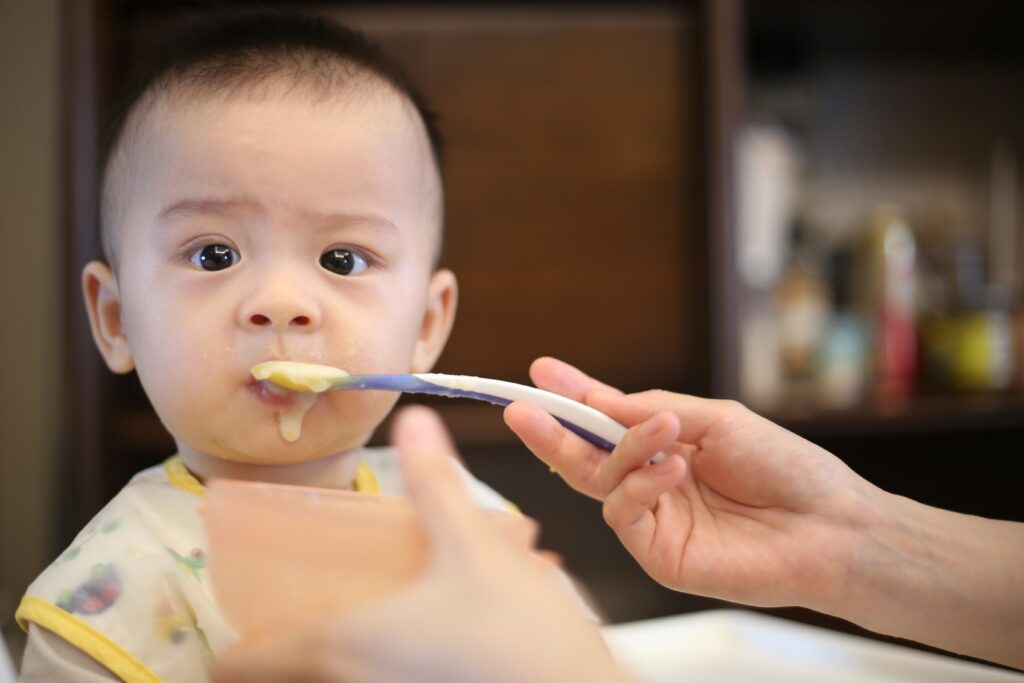
Starting solids is one of those milestones that feels exciting until you actually start researching it, at which point the amount of conflicting information is genuinely overwhelming. Purees vs baby led weaning, what age to start, which foods first, which foods to avoid, whether you need to introduce things in a specific order. Everyone has an opinion and most of them contradict each other.
This post cuts through the noise and gives you a practical starting point based on current guidance so you can actually enjoy this milestone instead of dreading it.
When to start
The general recommendation from most pediatric health organizations is around six months, and not before four months. The reason for the lower limit is developmental. Before four months, babies lack the digestive maturity and oral motor skills to handle anything other than breast milk or formula. Before six months, most babies also haven’t developed the head and neck control needed to sit supported and manage food safely.
Signs your baby may be ready, regardless of exact age, include sitting with minimal support, showing interest in food when others eat, having lost the tongue thrust reflex that automatically pushes food out of the mouth, and being able to hold their head steady. Age is a guideline. Readiness signs matter too.
If you’re unsure, ask your pediatrician at the four month visit. That gives you time to prepare without rushing.
How to start
Start with single ingredient foods. One new food every three to five days. The reason for this spacing is allergy identification. If you introduce three new foods in one day and your baby has a reaction, you won’t know which one caused it. Slow introduction lets you identify any problem foods clearly.
Start with small amounts. A teaspoon or two is plenty at first. The goal in the early weeks of solids isn’t nutrition, it’s exposure. Breast milk or formula remains the primary source of nutrition until around twelve months. Solids at this stage are practice.
Expect mess, rejection, and a lot of faces. Most babies need to be exposed to a new food multiple times before they accept it. One refusal is not a verdict. Keep offering.
Good first foods to start with
Single grain iron fortified baby cereal mixed with breast milk or formula is a traditional starting point and still a reasonable one, particularly because iron needs increase around six months. That said, it’s not required. Plenty of other first foods work just as well.
Pureed or mashed vegetables are a solid starting point. Sweet potato, butternut squash, peas, carrots, and green beans are all gentle options that most babies tolerate well. Starting with vegetables before fruit isn’t required but some parents prefer it on the theory that sweeter foods come later.
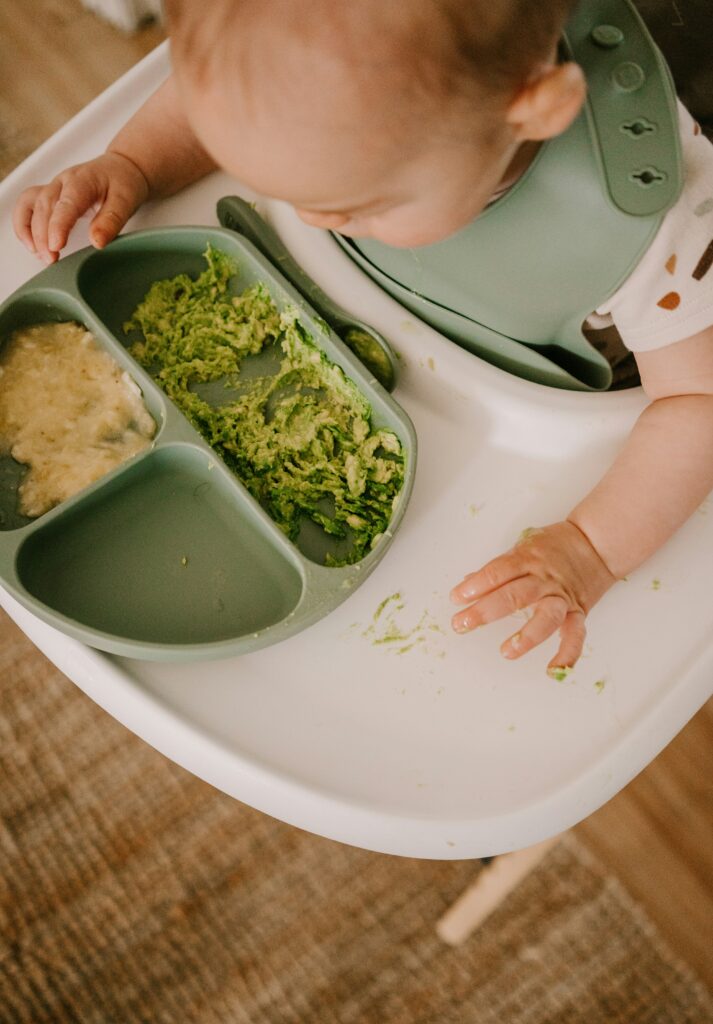
Pureed or mashed fruits including banana, avocado, pear, and apple are easy to prepare and generally well accepted. Avocado in particular is a good early food because of its healthy fat content.
Soft cooked eggs. Current guidance has shifted on this. Introducing allergenic foods including eggs, peanut products, and fish early rather than delaying them is now recommended by most pediatric allergy guidelines as a way to reduce allergy risk. Talk to your pediatrician about how to introduce these if you have a family history of food allergies.
The Tiny Human Toolkit has a first foods cheat sheet that lays out early foods by category with preparation notes, which is useful to have on your phone when you’re standing in the kitchen at five months trying to remember what you’re supposed to be doing.
What to skip in the first year
Honey. This is a hard rule, not a guideline. Honey can contain spores that produce botulism toxin, which is harmless to adults but dangerous to babies under twelve months whose gut flora isn’t developed enough to neutralize it. This includes honey in baked goods and processed foods. Check labels.
Cow’s milk as a main drink. Cow’s milk can be used in cooking and mixed into foods but shouldn’t replace breast milk or formula as a primary drink before twelve months. It doesn’t have the right nutritional profile for babies under one.
Added salt and sugar. Babies don’t need either and their kidneys aren’t equipped to handle much sodium. Skip the seasoning and let them taste food as it actually is.
Choking hazards. Whole grapes, raw hard vegetables, large chunks of anything, nuts, popcorn, and anything round and firm that could lodge in a small airway. If you’re doing baby led weaning rather than purees, food should be soft enough to squish between your fingers and cut or shaped appropriately.
Unpasteurized foods and certain fish. Raw or undercooked eggs, unpasteurized cheeses, and high mercury fish like swordfish, shark, king mackerel, and tilefish should all be avoided in the first year.
Purees vs baby led weaning
Both approaches work. Purees involve spoon feeding smooth or mashed foods and gradually increasing texture over time. Baby led weaning skips purees and offers soft finger foods from the start, letting the baby feed themselves. Some parents do a combination of both.
The most important factor isn’t which method you choose. It’s that your baby is getting regular exposure to a variety of flavors and textures, that you’re watching for allergic reactions, and that food is being offered in a safe way.
The Tiny Human Toolkit’s solid food introduction guide walks through both approaches month by month from four months through twelve, including what textures to expect at each stage and how to progress as your baby gets more practice. Having a reference that moves with your baby through the process is a lot more useful than a one size fits all guide.
One last thing
Starting solids is supposed to be fun. It’s messy and unpredictable and sometimes your baby will look at a piece of sweet potato like it has personally offended them. That’s all normal. Keep the pressure low, keep the variety coming, and let your baby set the pace. They’ll get there.
- American Academy of Pediatrics: Starting Solid Foods
https://www.healthychildren.org/English/ages-stages/baby/feeding-nutrition/Pages/Switching-To-Solid-Foods.aspx - Centers for Disease Control and Prevention (CDC): Infant and Toddler Nutrition
https://www.cdc.gov/nutrition/infantandtoddlernutrition/index.html - BabyCenter: First Foods for Baby
https://www.babycenter.com/baby/feeding/first-foods-for-baby_10313004 - Mayo Clinic: Introducing Solid Foods to Your Baby
https://www.mayoclinic.org/healthy-lifestyle/infant-and-toddler-health/in-depth/solid-foods/art-20047844 - NHS: Introducing Solid Foods
https://www.nhs.uk/conditions/pregnancy-and-baby/solid-foods-weaning/